Why the Shift from Gasoline Vehicles to Hybrid and Electric Cars is Essential to Improving Environmental Sustainability in Urban Areas like Washington D.C.
By Josie Jackson, Impact Associate
As gas prices continue to rise due to inflation and other factors, many car drivers are reconsidering the expense of gasoline-powered cars. While drivers consider financial cost, they should also consider environmental cost, especially in urban centers. With densely populated areas comes traffic, and traffic means more idling cars and concentrated CO2 emissions. The shift from gasoline-powered cars to electric vehicles (EVs) and hybrid cars shouldn’t just be spearheaded by consumer cost, although an advantage, as seen in their increased mile efficiency (National Renewable Energy Laboratory) and lower fuel costs in every state (Energy Innovation), but rather by their sustainability and reduction of air pollution. The stakes of this issue become clear when considering that in 2021, over 8.1 million people died due to air pollution (State of Global Air).
When gasoline is burned, it releases harmful vapors that contribute to air pollution (US Energy Information Administration). When gas-powered cars are concentrated in one place, such as Washington, D.C., or other urban areas, the air quality is significantly affected. Also, when cars run, they burn fossil fuels that release CO2, a greenhouse gas that contributes to global warming (Le Groupe Transit). Even when considering battery manufacturing and the environmental cost of charging, EVs contribute much less to air pollution (Environmental Protection Agency; MIT Climate). EVs produce 73% less greenhouse gas than traditional cars (International Council on Clean Transportation).
Switching to EVs has proven to be a sustainable effort for those implementing it. In Canada, air quality has improved in the past several years as green energy is prioritized through various efforts, including implementing federal regulations on engines (Government of Canada; Climate and Clean Air Coalition). The benefits of EVs are city-backed. DC provides incentives to encourage the switch into renewable energy, such as lower vehicle registration fees and a lower excise tax (Department of Energy and Environment).
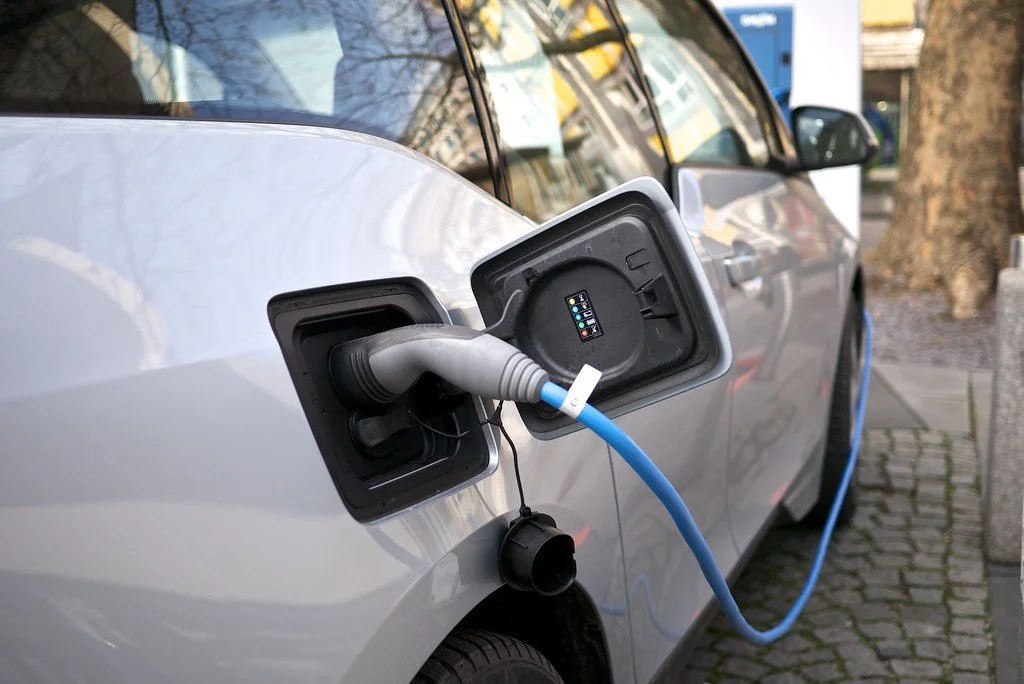
Drivers may be deterred from EVs because they worry that charging is slower than refueling their cars. While gas-powered vehicles remain the majority, chargers will not be prioritized like gas stations, but there has already been significant progress in charging stations’ efficiency. Chargers are classified in three levels in increasing order. Level 2 charging stations are common in retail and home spaces; they charge faster than level 1 stations. Level 3 charging stations, also known as superchargers, are very efficient and are found along most highways (ChargeLab). DC has 1,035 level 2 charging ports and 55 level 3 charging ports (Department of Energy and Environment).
While drivers are warming up to the idea of transitioning to EVs, hybrid vehicles are an ideal intermediate. Hybrids reduce gasoline consumption, lowering their contribution to air pollution compared to fully gasoline-powered cars. Drivers can choose between a plug-in hybrid vehicle, which functions as an EV with a gas tank as a backup, or a traditional hybrid that switches seamlessly between gasoline and electric (MIT Climate).
Even though most Georgetown students aren’t driving cars in DC, many are taking frequent Ubers or the occasional ZipCar. Ubers are a relatively green option, though not as green as public transportation, with more frequency of electric Uber drivers than the average motorist, and Uber committing to low-emission standards with EVs (Uber). Post-grad, Georgetown students should consider their transportation options wherever they end up, and if it's in a city, reconsider driving a traditional gas-powered car.